
Written by:

Portrait of Maren Voss, Editor-in-Chief.

Maren Voss

Part of issue:

05

Published:

Reading time:

8 min

Navigate:

Concrete in the Landscape: When Brutalism Meets the Natural World

Set against forests, cliffs, and water, concrete can feel surprisingly alive. When brutalism meets the landscape, its mass becomes a frame for light, weather, and nature itself.

Concrete is usually cast as the enemy of nature, but set in the wild it can feel surprisingly alive. Mass and landscape, it turns out, can need each other. Against forests, cliffs, and water, a concrete building stops reading as an intrusion and starts reading as a frame. Its stillness throws the movement of weather and seasons into sharper relief. The pairing is far more poetic than the usual opposition suggests.

Set against forests, cliffs, and open water, concrete's grey takes on the colours around it, shifting from one day to the very next. A wall that looks dead in the city comes alive when it reflects a sunset or darkens under rain. The landscape lends the building moods that change with the light and the hour. Nature becomes a collaborator rather than something to be excluded.

Set against forests, cliffs, and water, concrete can feel surprisingly alive. When brutalism meets the landscape, its mass becomes a frame for light, weather, and nature itself.

Concrete is usually cast as the enemy of nature, but set in the wild it can feel surprisingly alive. Mass and landscape, it turns out, can need each other. Against forests, cliffs, and water, a concrete building stops reading as an intrusion and starts reading as a frame. Its stillness throws the movement of weather and seasons into sharper relief. The pairing is far more poetic than the usual opposition suggests.

Set against forests, cliffs, and open water, concrete's grey takes on the colours around it, shifting from one day to the very next. A wall that looks dead in the city comes alive when it reflects a sunset or darkens under rain. The landscape lends the building moods that change with the light and the hour. Nature becomes a collaborator rather than something to be excluded.

Brutalist concrete architecture photographed for the article "Concrete in the Landscape: When Brutalism Meets the Natural World".

Architects learned to use concrete's mass as a steady counterpoint to wild surroundings. A heavy, unchanging shell makes the restlessness of trees, sky, and sea feel more vivid by contrast. Large openings frame specific views, turning the building into an instrument for looking outward. The structure holds still so the world around it can move.

There is real poetry in the meeting of poured concrete with timber, stone, and weathered rock. The made and the found sit side by side, each making the other more visible and more strange. Materials that share a mineral roughness seem to recognise one another across the divide. The boundary between building and landscape begins to blur.

Detail of raw concrete forms illustrating the article "Concrete in the Landscape: When Brutalism Meets the Natural World".
Textured concrete surfaces and structure shown in the article "Concrete in the Landscape: When Brutalism Meets the Natural World".

The pairing is far more poetic than the usual opposition suggests.

The structure holds still so the world around it can move.

Light and shadow across bare concrete, accompanying the article "Concrete in the Landscape: When Brutalism Meets the Natural World".

Left outdoors, concrete weathers, and that weathering can be a gift rather than a flaw. Moss, stain, and the slow patina of decades let the building settle into its setting. Over time the structure and the land begin to belong wholly to one another. Aging, often feared in concrete, becomes part of the beauty here.

These landscape works quietly rewrite what we expect concrete to mean. They show that mass and wilderness can amplify rather than fight each other. At their best, such buildings feel completely at home in nature, neither hidden nor at war with it. Set in the wild, brutalist concrete and the land each make the other more visible.
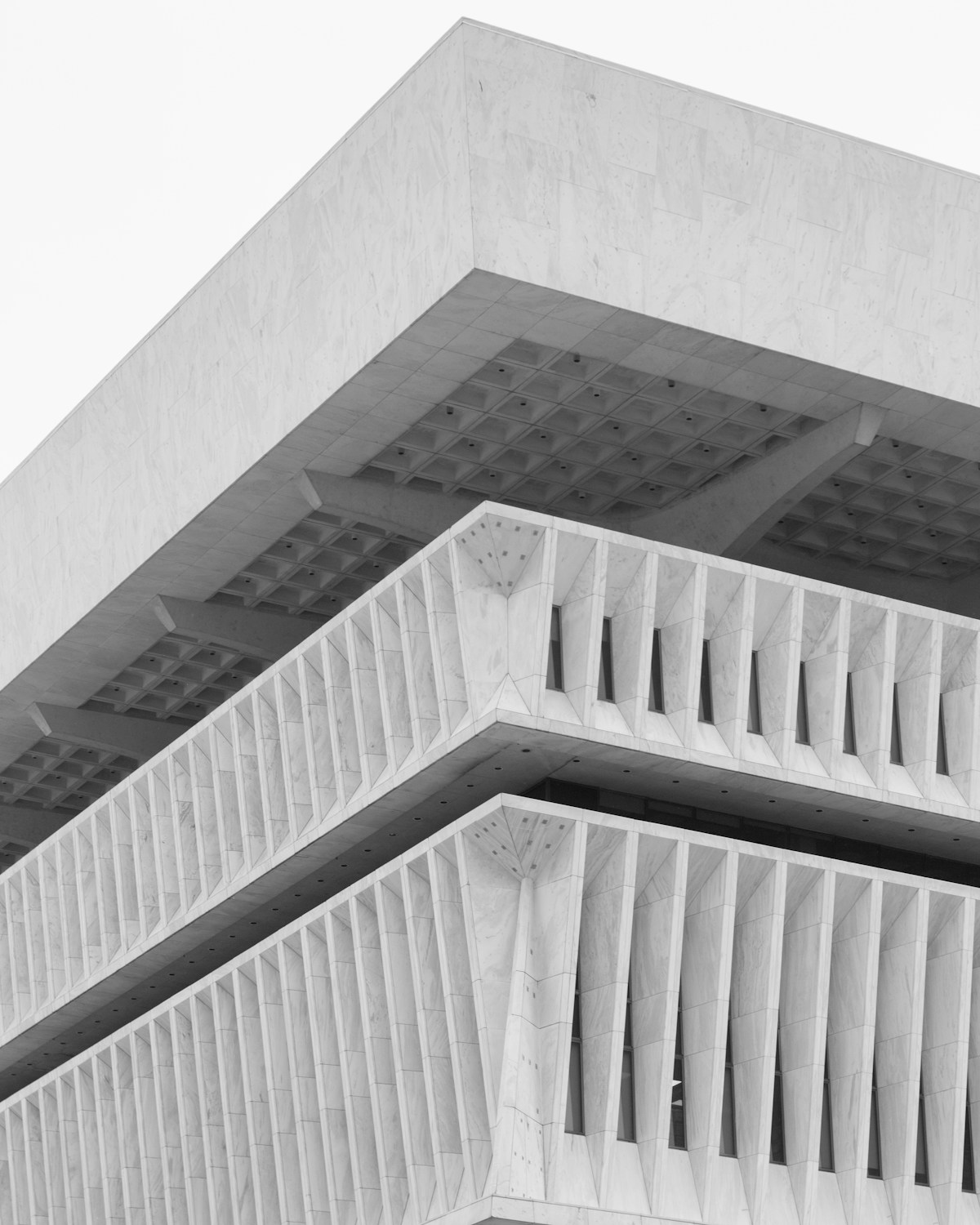
Monumental brutalist building featured in the article "Concrete in the Landscape: When Brutalism Meets the Natural World".

Create a free website with Framer, the website builder loved by startups, designers and agencies.